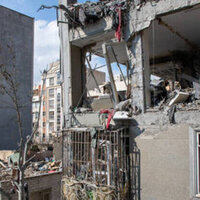



Four years after the liberation of Bucha, the town remains a central reference point for understanding the nature of the war in Ukraine and the limits of current diplomatic efforts. The events that followed the withdrawal of Russian forces in March 2022, when hundreds of civilians were found dead across the Kyiv suburb and the wider region, continue to shape how Ukraine defines both security and peace.
Bucha has become more than a historical episode. It functions as a political and moral benchmark in discussions about any future settlement. Ukrainian authorities report over 400 civilian deaths in the town itself and more than 1,300 across the broader Kyiv area during the Russian retreat phase, including cases of apparent execution-style killings. The scale and circumstances of those deaths remain a key factor in Kyiv's rejection of proposals it views as undermining sovereignty.
Against this backdrop, ongoing diplomatic contacts involving Ukraine, Russia, and the United States have not produced a coherent framework for ending the war. Instead, the process remains fragmented, with parallel discussions failing to converge into a structured negotiation. The lack of outcomes has reinforced the perception in Kyiv that diplomacy alone is insufficient under current conditions.
Russia's position, as reflected in repeated negotiating signals, continues to center on territorial concessions and restrictions on Ukrainian sovereignty. From Ukraine's perspective, these demands are not a starting point for compromise but a form of political dismantling. That gap defines why Bucha remains so relevant: it is viewed as evidence of what Russian control has already produced on the ground.
At the same time, limited but tangible humanitarian results have emerged from indirect contacts. Since early 2026, around 650 Ukrainian military personnel and seven civilians have been returned through exchanges involving multiple parties, including the United States. While these returns are significant for affected families, they do not alter the broader absence of a settlement path.
The wider international environment has also influenced the war's trajectory. Shifts in global attention, including crises outside Europe and pressure on energy markets, have reduced sustained political focus on Ukraine at moments when it remains dependent on external support. This uneven attention has created conditions in which the conflict continues without decisive diplomatic breakthrough.
On the battlefield, Ukraine has demonstrated partial recovery and adaptation. Ukrainian forces have regained control over roughly 470 square km in the south, according to military leadership. Alongside this, expanded drone capabilities and long-range strike operations have increased pressure on Russian logistics and infrastructure, extending the war beyond the immediate front line and raising operational costs for Moscow.
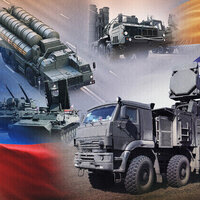
Russia, meanwhile, continues to conduct sustained offensive operations in eastern and southern sectors while absorbing significant losses. Despite this, its strategic calculation appears unchanged, relying on endurance and the expectation that prolonged pressure will eventually produce political exhaustion in Ukraine and its partners.
This military and diplomatic balance feeds directly into the meaning of Bucha in contemporary Ukrainian thinking. The town is not treated solely as a site of past atrocities, but as a reference point for what unchecked occupation and imposed settlement terms could mean in practice. For Ukrainian policymakers, it reinforces the view that any ?peace? built on coercive conditions risks repeating the logic of occupation rather than resolving it.
The symbolic weight of Bucha is further reinforced by continued European political engagement. Visits by EU foreign ministers and senior officials to commemorate the victims underline the extent to which the events remain embedded in European security discourse. These commemorations are tied to broader commitments to military support, reconstruction planning, and legal accountability for war crimes, including efforts to document evidence and explore tribunal mechanisms.
European officials have also framed Bucha within a wider obligation to ensure accountability, linking remembrance with legal and political initiatives aimed at prosecuting alleged crimes committed during the invasion. This approach reflects an understanding that the consequences of the war extend beyond the battlefield and into the structure of post-war international law.
Ultimately, Bucha functions as a dividing line in how the war is interpreted. For Ukraine, it represents evidence that conditions on the ground cannot be separated from political negotiations. For its partners, it reinforces the stakes of continued support. And for the broader diplomatic process, it remains a reminder that any settlement framework disconnected from these realities is unlikely to be viewed as legitimate or sustainable.